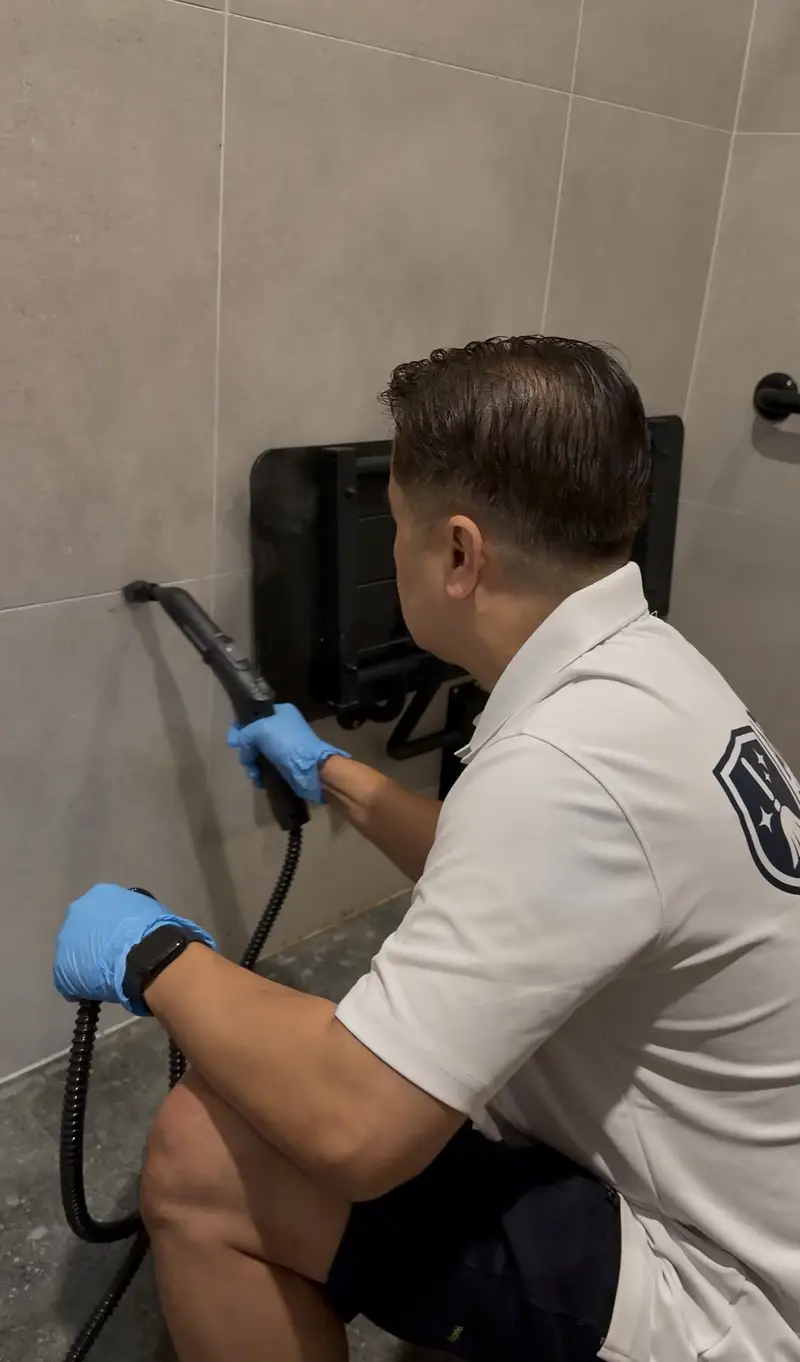

The changeroom is the moment of truth for every gym. It's where sweaty, tired members are at their most critical — and where hygiene failures are impossible to ignore.
Where Bacteria Hides
Most gym owners focus on visible cleanliness: no rubbish on the floor, paper towels stocked, mirrors wiped. But the real risks are invisible:
Shower Grout Lines
Warm, moist grout is the perfect breeding ground for bacteria and mould. Without targeted treatment, grout lines become permanent reservoirs of contamination — even in showers that "look clean."
Locker Interiors
Members store sweaty gear, wet towels, and open drink bottles in lockers. Over time, the interior surfaces build up a biofilm that regular surface spraying doesn't penetrate.
Drain Covers
Hair, soap, and organic matter accumulate under drain covers, creating blockages and bacterial colonies that produce odours. Most cleaners wipe around drains — they don't clean inside them.
Bench Undersides
The underside of changeroom benches collects dust, moisture, and skin cells. It's rarely cleaned by generic services, and it's at face-level when members bend down to tie their shoes.
The Health Implications
Poorly maintained changerooms are linked to:
What Proper Changeroom Hygiene Looks Like
A proper protocol targets:
1. Daily: Surface sanitisation of all touchpoints, floor mopping with antimicrobial solution, waste and dispenser management
2. Weekly: Grout treatment, drain cleaning, bench deep-clean, ventilation check
3. Monthly: Full deep clean including ceiling vents, light fixtures, and behind-fixture areas
Your changeroom doesn't need to be a spa. It just needs to be genuinely clean — not "looks clean from the doorway" clean.